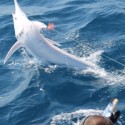
Every sportsfishing captain I know would love just to see a Albino Marlin and to catch the most prized game fish in the World ... well thats just something you can ONLY dream about. These pictures are truly once-in-a-lifetime images. Billfish "experts" agree that these rare albino blue marlin pictures may be the first ever captured on camera. Marlin are among the most prized … [Read more...]
2014 Los Sueños Signature Triple Crown Shatters Fishing Records
01/27/2014 by Leave a Comment
Two thousand, one hundred and seventy billfish released in three days! If this doesn't make all you avid saltwater anglers scurry to get on the next plane to Costa Rica, we don't know what will. Los Suenos Marina, reputedly the finest marina on the Pacific coast south of the US border (Cabo San Lucas in Mexico and Viña del Mar in Chile might beg to differ, but who cares), … [Read more...]
World Records Of Saltwater Fish Caught In Costa Rica
08/04/2013 by Leave a Comment
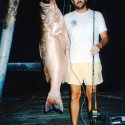
Costa Rica is known around the world for its big-game saltwater fishing done on the Pacific and Caribbean coasts, which is done from boats to catch large open-water species such as tuna, wahoo, dorardo and billfish (marlin, sailfish and swordfish). Recently, Sport Fishing Magazine sought input from seven angling experts, historians and authorities and did their top 100 world’s records … [Read more...]
Quepos Billfish Cup Controversy at Marina Pez Vela
02/17/2013 by 4 Comments
First, our congratulations to the 12 boats, captains, crew and anglers, they released 218 billfish overall (216 Sailfish and two Marlin) some very impressive numbers to for this small size of tournament in Quepos. Second, we give excellent credit to Costa Rica Sportfishing, (Americana Sportfishing) who, while, during this second annual Quepos Billfish Cup tournament kept … [Read more...]
Good or Bad Luck Fishing With Bananas in Costa Rica
01/15/2013 by Leave a Comment
Lets face it: anglers are a very superstitious lot, especially those seasoned anglers and captains in Costa Rica. Spend more than a few days on a fishing boat, and you start to understand the feelings of “Good and Bad Luck” … and everything in between. When it comes to bananas, they are considered the epitome of bad luck by many Costa Rica captains. Some will flat out … [Read more...]
DNA Helps Stop Illegal Sailfish Fishing in Costa Rica
11/10/2012 by Leave a Comment

SENASA Costa Rica has a new tool to stop illegal sail fishing. The Nationa Animal Health Service (Senasa) now has a new tool to halt illegal sail fishing. A three-year-old law has banned catching and selling the fish. But despite this, commercial fishermen have continued the practice, aided by the fact that, cut up into pieces and frozen, the meat is often passed off as that of legal species, … [Read more...]
Fishing Costa Rica’s Summer or Rainy Season
06/18/2012 by Leave a Comment
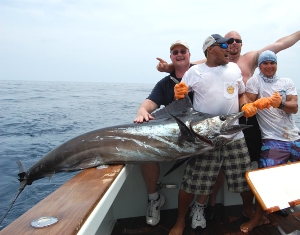
Yeah, I know, why would you want to fish during Costa Rica’s raining season (June - Nov)? Well, summer can be the perfect time to fish in Costa Rica; there is some very decent billfish and tuna bites. However, the big attractions are, during the 'Green Season' hotel and airline rates are lower, plus there is a greater availability of the country's top captains, which means, … [Read more...]
Redbone Celebrity “Fishing” Tournament Helps Raise Funds For Cystic Fibrosis
03/12/2012 by 2 Comments

Huge breakthrough in CF gene research; Redbone Celebrity Tournaments perseveres with fund-raising efforts in 25th year Costa Rica’s Crocodile Bay OSA Classic March 17 -22 helping to catch a cure for CF. PUERTO JIMENIZ, Costa Rica and ISLAMORADA, Fla. USA -- Hopefully there’s a lot to celebrate at the 25th anniversary of the Redbone Celebrity Fishing Tournament this November after a … [Read more...]
Puntarenas, Costa Rica Fishing Tournament Closed to Longliners
03/01/2012 by 3 Comments
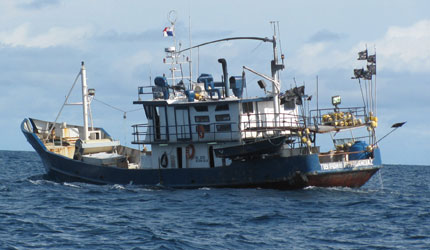
Agreement yields longline closure for this weekend’s Costa Rica fishing tournament 40-mile area commercial closure during Presidential Challenge, March 1 - 4 PUNTARENAS, Costa Rica -- (Feb. 27, 2012) – Recreational sportfishing and billfish conservation have made a huge impact on Costa Rica’s tourism and economy. In a groundbreaking move and through a joint … [Read more...]
Costa Rica Fishing License – Fishing and Boat Fees Increase
11/29/2011 by 2 Comments
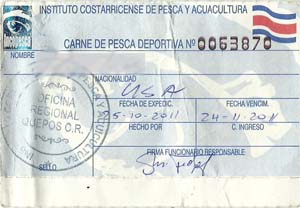
In the past, tourist and nonresident anglers could pick whether or not they wanted a monthly ($13 USD) and/or yearly fishing license ($25 USD). Considering that most anglers come to fish once a year (about 98%) they’d pick the cheaper. Fishermen who don't know this in advance have been known to get a little upset at having to shell out cash at the dock to get one before they set forth on a … [Read more...]
Costa Rica Sashimi – You Can Not Get It Fresher Than This
11/03/2011 by 2 Comments
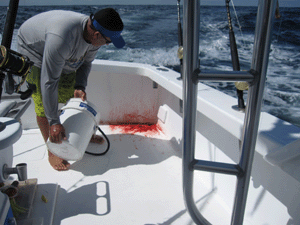
One of the bad things about growing up in a beach community and fishing since you can remember, you know what fresh fish is. So when a friend invited me to this new trendy sushi place in San Diego that boasted it had the freshest fish in town, I balked. She continued saying, “The Ahi (or Yellowfin) is flown in daily, and the sashimi is out of this world!” FRESH! - I chuckled. She and the … [Read more...]
Costa Rica’s Sportfishing and Tourism Commission Adds TBF’s Conservation Directors
08/25/2011 by Leave a Comment

SAN JOSE, Costa Rica --- Costa Rica, one of the world’s premier sportfishing destinations, has named Herbert Nanne, and Monica Gutierrez to the country’s recently formed Sportfishing and Tourism Commission. Nanne is a biologist and The Billfish Foundation’s (TBF) Central America Conservation Director. Gutierrez is a lawyer and President of Pronature, a sister conservation entity to … [Read more...]





Comments